
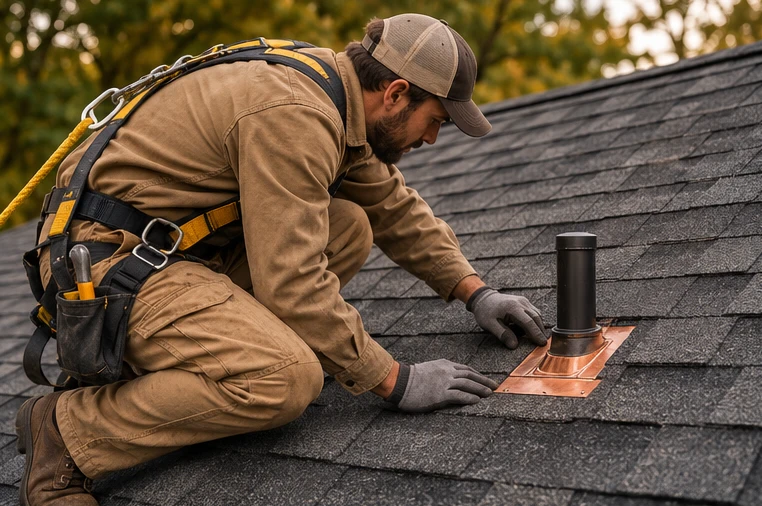
A targeted repair can make sense when the damage has a clear source and the surrounding roof is sound. Compare replacement when wear is widespread, leaks keep returning or an inspection finds problems across several sections.

Trace the leak before choosing the scope
An interior stain marks where water became visible. Water can enter higher on the roof, run along a structural member and show up some distance away. Record the room, the weather and the time the stain appeared. If you can safely take a photo from indoors, capture the whole area and a closer view. Outside, take a ground-level photo of the corresponding roof slope. These clues help the roofer decide which flashings, valleys, vents or drainage features to check first. Stay off the roof and report any sagging ceiling or water near electrical equipment promptly.
When a targeted repair is worth comparing
A roof with one damaged flashing, a limited patch of missing shingles or a failed seal around a penetration may have an identifiable repair area. Ask whether adjoining materials can be lifted or worked around without breaking, and whether compatible roofing is available. The written scope should describe how the repair ties into the covering and what happens if wet or damaged decking is found. Ask which roof sections the assessor checked. Even when a leak has a likely source, a roofer can explain whether additional openings or observations are needed before settling on the scope.
When replacement deserves a closer look
Several leaks, widespread shingle wear, a large area of damaged material or repeated repairs in different places can justify comparing replacement. The assessor should explain what they observed and why the retained roof would be difficult to repair reliably. Ask for photos or a sketch showing each affected slope. A replacement quote should cover removal, preparation, the proposed covering and the details that carry water away from the building. Make sure it names any structures or sections outside the quote, such as a detached garage, porch or addition, and explains how transitions will be handled.
Use the age as context
If you have the installation date, share it along with the material, roof history and any documentation. An older roof may still have sound areas. A newer roof can develop a leak at a wall, skylight or vent if that detail fails. The observed condition matters because materials and exposure differ from one slope to another. Tell the roofer about additions, solar installation or vent work since the roof was installed. Those changes can create a useful timeline. Ask what signs of wear are visible and whether those signs are limited to one location or spread across the roof.
Discuss partial replacement when the boundary is clear
Replacing one roof plane can sometimes make sense when damage ends at a natural boundary and adjacent material is suitable to retain. Ask how the work will meet ridges, valleys and wall connections, and whether color or texture will differ. The same nominal shingle color can look different next to weathered material. A written estimate should explain which section will be replaced and how adjoining areas will be protected. If damage reaches across a valley or into the next slope, ask how that changes the scope. A clear boundary should serve the building as well as the budget.
Compare each option over the next few years
Write down what each option resolves, which work remains and what might trigger another visit. A repair may address the immediate defect with less disturbance to the property. A larger replacement may allow broader work on underlying materials, vents and flashing. The right comparison considers the condition left behind, the practical scope and what each written warranty covers. If you plan to sell or remodel soon, mention that timing and ask how the proposed work interacts with it. Avoid relying on a rough estimate for a future repair when the roof’s condition has yet to be assessed.
Ask how decking and flashing affect price
Decking supports the roof covering, and some damage may be concealed until work starts. Ask how any repair or replacement of that material is priced and approved. Confirm the treatment of flashing at valleys, walls, skylights, chimneys and roof edges. With a repair, ask how water will drain past the new section into the existing roof. With replacement, ask which materials will be removed and how related details will be rebuilt. In both estimates, check who will contact you if the work exposes something different from what could be seen at the assessment.
Example of a useful decision
Consider a leak under a pipe penetration after one hard rain. If the assessor finds a failed boot and sound adjacent roofing, a targeted scope may explain exactly how the boot will be replaced and integrated. Now consider a house with missing shingles on several slopes, brittle surrounding material and leaks recorded in two rooms. In that case, ask for a side-by-side scope that shows how many areas a repair would address, whether the adjoining materials can support it and what a replacement would include. These questions help convert a general recommendation into a decision grounded in the roof itself.
Document what you decide
Save the estimate, inspection findings and photos with the installation or repair record. Write down any areas the roofer recommends monitoring, along with what to watch for. If a leak appears again, document the date, the weather and whether it was in the same spot. This gives the next assessment a better starting point. When you call your local office, have the property ZIP code, the general roof material and a short timeline ready. If you already have estimates, compare them using the actual areas, materials and exclusions each one lists.
Questions to bring to an inspection
Ask the roofer to show where the water likely entered, what else was checked and which areas are still unknown. If two contractors give different answers, compare what each person could see and whether they considered the same roof sections. You can ask for more photographs or a written explanation before choosing work.