
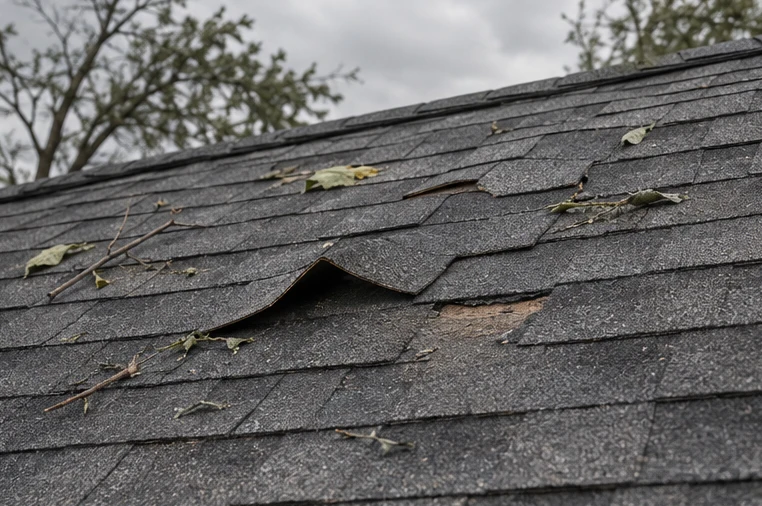
After a storm, stay off the roof, look for damage from a safe place, and document changes with dated photos. Contact the local office for an assessment if you see missing roofing, displaced material, debris, damaged drainage or new interior stains.

Check conditions before looking at the roof
Wait until conditions around the property are safe. If you see a downed power line, unstable tree or other immediate hazard, keep away and contact the appropriate emergency service. Inside, a sagging ceiling or water near wiring needs prompt attention. Keep occupants away from the affected area. Take photographs only from safe places with clear access. Wet ladders, roofing and debris can create a serious fall risk. A rooftop visit, debris removal or temporary cover is work to discuss with a professional when it is safe to approach the building.
Walk the property from ground level
Look from several sides of the building, since wind and debris may affect some slopes more than others. Note obvious missing shingles or tiles, roof material on the ground, shifted gutters, hanging metal or damage to vents. Use your phone’s zoom for photos from a safe distance. Photograph the wider area first so a roofer can tell which side of the building is shown, then take a closer image of the affected spot if you can do so safely. Record the date and which side faced the wind, if known. If part of the roof is out of view, describe the obstruction.
Check for new interior moisture
Look for fresh stains around ceilings, walls and skylight wells. Compare the area with any photos taken before the storm. If a stain grows, a drip starts or a musty odor develops, note when the change occurs. Keep a short timeline of the storm, the first visible sign and later developments. If a ceiling looks unstable, keep clear. Provide the address or ZIP code, room location and photos to the office when you call. A clear description of where water is appearing gives a roofer a way to plan the inspection even when the entry point is hidden.
Know what damage can look like
Wind can loosen or remove roof covering, particularly around edges, ridges or other exposed features. Hail and falling debris can affect vents, gutters and roofing. Rain can find a path through a damaged transition, but the interior symptom may appear hours later. A blocked gutter or disturbed downspout can also contribute to water running where it should not. Visible damage is useful to record, and an inspection can check areas that cannot be seen from the ground. Describe what you observed in ordinary words and leave the diagnosis to the assessment.
Separate immediate protection from a permanent repair
If rain is still entering, ask the local office what temporary protection can be arranged and when it is safe to do that work. Temporary measures may help limit further exposure while the roofer evaluates the covering, decking and flashing. Ask how the temporary work will be documented and whether the permanent repair requires another visit. Save invoices and before-and-after photos. When discussing a permanent scope, ask how far the damage extends and how the new material will connect to the roof around it. Confirm how any concealed damage will be handled if discovered later.
Prepare for the assessment
Collect the approximate age of the roof, earlier leak history and any installation or warranty records you can locate. Share roof-mounted equipment, access gates, pets, tenant contact requirements and any damaged limbs near the building. A roofer can explain which sections can be accessed and which conditions prevent a full assessment. Ask for the findings by roof area, the observed damage and the proposed next steps. If you need to coordinate access with a landlord, tenant or property manager, gather the contact information and agree on a time when all necessary spaces can be opened safely.
Keep records for the people involved
Create a folder for the date of the event, photographs, receipts, inspection notes and written estimates. Label pictures by date and location, such as “rear slope from driveway” or “stain above upstairs landing.” If you intend to contact your insurer, ask the insurer directly what documentation it needs and how to report the event. Coverage and claim decisions depend on the policy and the circumstances. Keep copies of what you provide and ask for clarification when the roofer’s proposed work and another party’s description refer to different roof sections or materials.
Review the scope and time frame
The scope should describe whether work involves one detail, a roof section or several slopes. Ask which materials are included, how any temporary protection will be removed and how adjacent areas will be protected. If the roofer identifies a repairable area, ask about material compatibility and how the finished work will be reviewed. If multiple areas are involved, request a clear explanation of the options and what could change once the roof is opened. Discuss timing, access and weather constraints before scheduling. Keep the best contact number available in case conditions change.
What to report when you call
Start with the property ZIP code, the type of building and what happened. Then describe any active water entry, visible debris or missing materials and any safety concern that limits access. A short report such as “there is a stain in the rear upstairs room after wind and rain, and shingles are visible on the driveway” is enough to begin the conversation. Tell the office whether you have photographs and whether an earlier repair was made in the same area. Use the location directory to reach the office closest to the property.
Watch for changes during the next rain
From indoors or another safe position, check whether the first stain grows or a new one appears. Write down the time and the area affected. These details can help a roofer decide which section to evaluate first. Let the office know if conditions changed after you first called, especially if water entry has become active or access to the affected room has changed.