
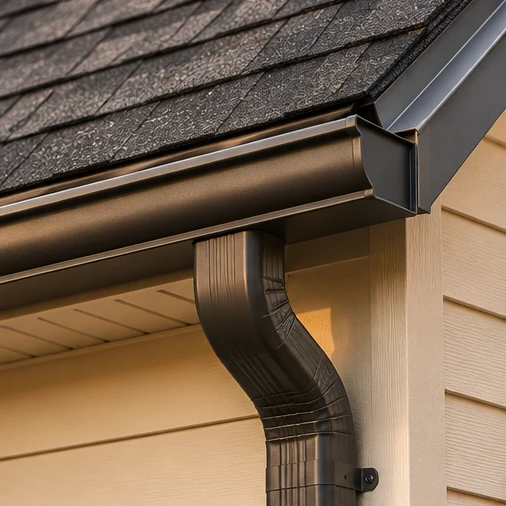
Check roof surfaces, gutters and drainage from the ground before the wet or cold season and after major weather. Record changes with photos and call about active leaks, missing materials or recurring overflow.

Create a baseline from the ground
Pick several safe ground-level viewpoints around the property. Take wide photos of the roof slopes, edges, visible gutters and downspouts. Add closer pictures of features you can see clearly, such as a valley outlet, vent or chimney. Label the photos by date and side of the building. When you repeat the check later, use similar viewpoints. A simple baseline helps you recognize a new gap, shifted edge or gutter sag. Areas you cannot see can be noted for the next professional assessment. Keep your feet on the ground and stay clear of overhead lines and loose debris.
Check the path of runoff
Start where water leaves the roof and follow the route you can see. Look at where valleys discharge into gutters, where downspouts exit and where those outlets send water. Ask whether discharge lands on a lower roof or collects near an entrance. After rain, look for water marks below gutter joints, pooled water near downspouts or new washout along the ground. If one corner repeatedly spills, note whether it happens in ordinary rain or only in a downpour. A roofer can use that information to evaluate whether the issue relates to debris, the outlet or the drainage layout.
Watch the roof edges and transitions
Check for loose roofing near edges, ridges and corners from a safe position. Pay attention where the roof meets siding, a chimney or a skylight. Make a note if flashing looks displaced or a part of the covering appears to have shifted. If you see fallen pieces of roofing in the yard, photograph the area and report it. Avoid tugging or moving loose material. The surrounding roof may need an inspection even when the visible problem looks small. The goal of the ground-level check is to record changes and decide whether a call is warranted.
Look inside for signs that persist
When it is safe, check ceilings and walls for new discoloration around upper rooms, chimneys, skylights or roof-to-wall connections. Write down the date and whether the area changes after rain or a thaw. If a mark is present in older photos, compare size and color with the current view. Recurring dampness or an active drip deserves a conversation with the local office. Keep clear of sagging material and wet electrical equipment. When reporting a stain, include the nearest room corner or wall so an assessor can relate it to roof features outside.
Plan around the property’s seasons
Different seasons reveal different issues. In a location that sees freezing weather, note whether symptoms occur during a thaw and whether there is visible ice at the eaves. In a location with a pronounced wet season, check drainage and record changes during the dry period while access planning is easier. In storm-prone periods, repeat the ground-level check after strong wind or debris. Make the schedule fit the actual roof and climate. If overhanging trees regularly drop leaves into valleys or gutters, ask about a suitable inspection or cleaning schedule for that building.
Use the checklist after recent work
If roof work was recently completed, keep the contract, product information and photos from the job. During a routine check, compare areas of recent work with earlier images and note anything that has shifted. Confirm that gutters and outlets discharge where expected and look for recurring water marks. If equipment was added or moved, record the date and location. Save the contact details for the company that carried out the work and the local office. If something changes, a brief timeline is easier to use than a folder of unlabeled photos.
Decide what needs a call
Call about missing materials, visible openings, recent debris impact, a leak that recurs, or water that reaches an interior space. Also call if there is repeated gutter overflow at the same point or a drainage change after roofing work. Report when it happened, the ZIP code and what you can safely see. For issues that are difficult to describe, a wide photo and a close photo from the ground can help. Ask what should be checked during an assessment and whether the assessor needs access to an attic or an occupied space.
Keep a small record for each check
A useful record needs a date, the weather, the feature you looked at and what changed. For instance, “water spilled at the rear valley outlet in steady rain” tells a roofer more than “gutter problem.” Include a location label and mention whether there is an interior symptom nearby. Save inspection findings and completed repair scopes with the notes. If you schedule an estimate later, the record will make it easier to explain why you are calling and what you expect the visit to address. It can also help you remember which sections have already been repaired.
Ask about access before arranging maintenance
If the roof is high, partly obscured or difficult to reach, tell the office before scheduling. Explain whether a gate, shared driveway, tenant or business opening hours will affect access. Identify the roof material if you know it and mention any rooftop equipment. The office can discuss which services are available locally and how the work can be planned for the property. After a visit, ask what was found, what work was completed and what to monitor next season. File that answer with your photos so your next check starts from a clear record.
Keep the next check simple
Choose a date to repeat your ground-level walk and put it next to other seasonal home tasks. Use the same notes and photographs so you can compare features in the same places. If an issue already needs attention, report it now and record what the office tells you. The next check should focus on new changes, areas you were asked to monitor and places where runoff is still difficult to see.
Keep the contact handy
Save the office phone with the maintenance record so you can find it when the weather changes.